
Key takeaways
- Lowest total yearly cost in 2026: Russia (about ₹4.6 lakh to ₹10.6 lakh), Mauritius (about ₹5.5 lakh to ₹10 lakh) and Serbia (about ₹10 lakh to ₹15 lakh).
- EU member states we guide on: Cyprus, Malta and Latvia. Serbia is in Europe but not in the EU.
- Most scholarships are partial tuition discounts. Full scholarships are rare.
- The cheapest country is not always the best value. Check recognition, language and total cost.
- For medicine, confirm National Medical Commission (NMC) rules before applying.
On this page
Quick answer: the best places by goal · Best places to study abroad at a glance · How much does each country cost? · Russia · Mauritius · Serbia · Latvia · Cyprus · Malta · South Korea · Singapore · How to choose the best country for you · Common mistakes · Safety, recognition and visas · Frequently asked questions
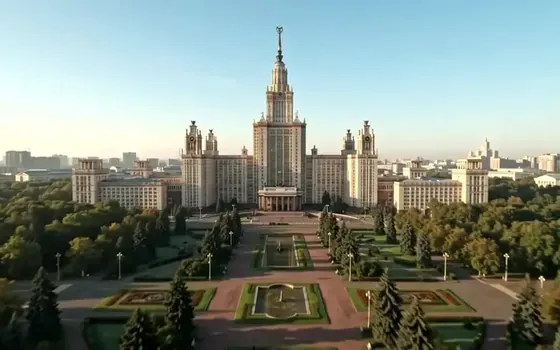

Best places to study abroad at a glance
| If you want... | Best places to look at | Why |
|---|---|---|
| Lowest total cost | Russia, Mauritius, Serbia | Lowest yearly totals in our 2026 comparison |
| Medicine | Russia, Latvia, Serbia | Established medical programmes at lower costs. Check NMC rules |
| Engineering | Russia, Serbia, Latvia, South Korea | Strong science and technology programmes |
| English-medium teaching | Malta, Singapore, Mauritius, Cyprus | English is the main or widely used teaching language |
| Study in the EU | Cyprus, Malta, Latvia | EU member states with English-taught options |
| Business, hospitality, tourism | Cyprus, Malta, Mauritius, Singapore | Established options in these fields |
| Technology and research | South Korea, Singapore | Strong universities. Admission is competitive |
| Scholarships | Russia, Mauritius, Serbia, South Korea | Government quota, college scholarships or merit awards |
These are starting points, not guarantees. Fees, rules and recognition change every year, so confirm details with official sources and the university.
How much does each country cost for Indian students?
Tuition is only one line in your budget. The yearly totals below include tuition, living costs and one-time first-year charges such as visa, insurance and flights. Later years are usually lower because setup costs do not repeat.
| Country | Estimated yearly total | Best for |
|---|---|---|
| Russia | ₹4.6 lakh to ₹10.6 lakh | MBBS, engineering |
| Mauritius | About ₹5.5 lakh to ₹10 lakh | Business, IT, hospitality |
| Serbia | About ₹10 lakh to ₹15 lakh | Medicine, IT, business |
| Latvia | About ₹12 lakh to ₹22 lakh (indicative) | Engineering, IT, business |
| Malta | About ₹17 lakh to ₹30 lakh (indicative) | Tourism, finance, IT |
| Cyprus | ₹18 lakh to ₹32 lakh | Business, hospitality |
| Singapore | Often well above ₹20 lakh | Top research, business |
| South Korea | Varies by university and scholarship | Technology, research |
Rupee figures use about ₹108 per euro and ₹95 per US dollar (October 2026) and are planning estimates. Confirm exact tuition with each university. For full breakdowns, read our guides on the cheapest countries to study abroad, the cost of studying abroad including living expenses, the total cost of studying in Europe and studying abroad under 10 lakhs. Germany has free tuition at most public universities but a higher first-year total; see the Germany cost guide.
Not sure which country fits your budget?
Share your marks, course and budget. A counsellor will compare real fees, scholarships and living costs. It is free, with no commitment.
Call NowStudy in Russia: is it a good place to study abroad?
Best for: Medicine, engineering and natural sciences at the lowest total cost.
Russia has a long tradition of higher education, with large student communities in Moscow and Saint Petersburg and universities across many cities. Public university tuition for MBBS commonly falls between ₹2.3 lakh and ₹7.5 lakh per year, engineering between roughly ₹1.5 lakh and ₹5 lakh, and hostels are priced from about ₹15,000 to ₹1 lakh per year. Students can apply through the Russian government scholarship quota or directly to universities.
- Estimated total: ₹4.6 lakh to ₹10.6 lakh per year
- Capital: Moscow. Currency: Russian rouble. Main language: Russian
- Government scholarship quota applied for only on education-in-russia.com
Watch out for: Cold winters, learning Russian for daily life, and conditions linked to the Russia-Ukraine conflict and sanctions that can affect flights and international payments. Check the latest Ministry of External Affairs guidance and confirm the fee payment method before committing. Medical students must plan for NMC rules and the later licensing exam.
Read more: Study in Russia, study in Russia for Indian students, MBBS in Russia, engineering in Russia and the Russian government scholarship.
Study in Mauritius: is it a good place to study abroad?
Best for: English-taught business, finance, hospitality and IT at an affordable cost.
Mauritius is an Indian Ocean island where English and French are widely used, with a large population of Indian origin, so food and festivals feel familiar to many students. At our partner colleges, listed fees start from USD 3,500 with scholarships of 40% to 50%, which brings the fee after scholarship to about USD 2,100 a year at some colleges.
- Estimated total: about ₹5.5 lakh to ₹10 lakh per year
- Capital: Port Louis. Languages: English and French; Creole widely spoken
- Scholarships of 40% to 50% at partner colleges
Watch out for: Check programme approval and degree recognition for your career plan, and confirm the college-wise fee and scholarship in writing.
Read more: Study in Mauritius and our partner colleges with fees and scholarships listed openly.
Study in Serbia: is it a good place to study abroad?
Best for: Affordable study in medicine, engineering, IT and business in South-East Europe.
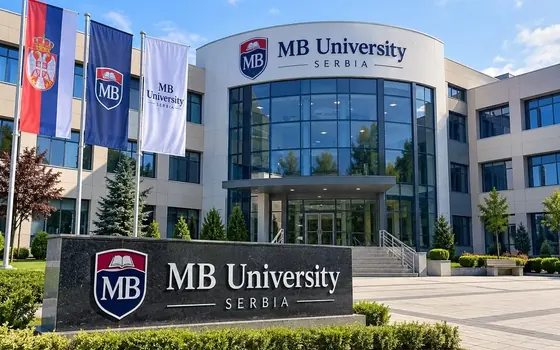
Serbia offers state and private universities, a lower cost of living than much of Western Europe and an active student culture. At MB University, the listed fee is EUR 5,500, with a scholarship described as up to 10-15%, and Perspective Education Group charges zero consultancy fees for Serbia.
- Estimated total: about ₹10 lakh to ₹15 lakh per year
- Capital: Belgrade. Currency: Serbian dinar. Main language: Serbian
- Not an EU member state
Watch out for: Serbia is not in the EU, so verify recognition for regulated careers such as medicine. Confirm the scholarship amount in your offer letter.
Read more: Study in Serbia.
Study in Latvia: is it a good place to study abroad?
Best for: English-taught medicine, dentistry, IT and engineering in a Baltic EU country.
Latvia is an EU member state on the Baltic Sea, with universities that offer international programmes in English and a compact, well-connected capital in Riga. Costs are generally lower than in Western Europe, with indicative yearly totals of about ₹12 lakh to ₹22 lakh.
- EU member state. Capital: Riga. Currency: euro
- English-taught programmes vary by course
- Roughly EUR 3,000 to EUR 8,000 tuition for many non-medical programmes (indicative)
Watch out for: Winters are cold and the Indian community is smaller. Confirm exact tuition with the university.
Read more: Study in Latvia.
Study in Cyprus: is it a good place to study abroad?
Best for: Business, tourism, hospitality, computing and engineering in English within the EU.
Cyprus has been an EU member since May 2004. Many programmes are taught in English on smaller island campuses with a Mediterranean climate. Students may work part-time up to 20 hours a week under the rules that apply. Private university tuition is roughly EUR 7,000 to EUR 12,500 a year, and merit scholarships of 20% to 50% are common for strong applicants.
- Estimated total: ₹18 lakh to ₹32 lakh per year
- Capital: Nicosia. Currency: euro. English widely used
- Part-time work up to 20 hours a week
Watch out for: Compare public and private universities, verify accreditation and plan for strict student work rules. Public university fee benefits mostly apply to Cypriot and EU students.
Read more: Study in Cyprus, Study in Cyprus guide, fees, visa and scholarships.
Study in Malta: is it a good place to study abroad?
Best for: An English-speaking EU island with strengths in business, IT, tourism and finance.
English is an official language in Malta and widely used in teaching and daily life, and Valletta is a UNESCO World Heritage city. Private institutes charge roughly EUR 4,000 to EUR 10,000, with indicative yearly totals of about ₹17 lakh to ₹30 lakh.
- EU member state. Capital: Valletta. Currency: euro
- Languages: Maltese and English
- Small and walkable
Watch out for: Rent is a major cost and the job market is small, so budget carefully.
Read more: Study in Malta.
Study in South Korea: is it a good place to study abroad?
Best for: Technology, research and strong students aiming for top-ranked universities.
South Korean universities rank among the world's strongest, and our programme features top 100+ universities. Major intakes are March and September, and the student visa is the D-2. Government and university scholarships exist, including the Global Korea Scholarship (GKS) administered by NIIED, which is highly competitive and has yearly deadlines.
- Capital: Seoul. Currency: Korean won
- Intakes: March and September. Student visa: D-2
- Scholarships: GKS and university awards
Watch out for: Costs and fees vary by university and scholarship. Check the official GKS announcement for current eligibility and deadlines.
Read more: Study in South Korea.
Study in Singapore: is it a good place to study abroad?
Best for: Strong students aiming at top research universities, polytechnics and an Asian career hub.
Singapore is a global hub with strong universities and English as the main language of instruction. It is well connected to the rest of Asia and warm all year. Admission is competitive.
- Capital: Singapore (city-state). Currency: Singapore dollar
- Languages: English, Mandarin, Malay, Tamil
- Estimated total: often well above ₹20 lakh per year
Watch out for: Costs are high, so scholarships and a financial reserve matter.
Read more: Study in Singapore.
How to choose the best country to study abroad
- Write your goal. Course, career and whether you plan to return to India, work abroad or study further.
- Set a total budget. Include tuition, living costs, insurance, visa fees and travel for the full course, not only year one.
- Check language comfort. Decide whether you are ready to learn a new language for daily life.
- Check recognition. For medicine, law, teaching or engineering licences, confirm that Indian regulators and employers accept the degree.
- Compare two or three countries. Use the tables above and our destinations page.
- Shortlist universities and verify them. Browse our partner universities and confirm details on each official site.
- Check scholarships and funding. See our guide to study abroad scholarships.
- Talk to a counsellor. A free consultation can test your plan against real fees and rules.
Common mistakes when choosing a country
- Choosing only because friends or agents recommend it.
- Ignoring the total cost for the whole course.
- Not checking accreditation and recognition.
- Believing promises of guaranteed admission or visas.
- Starting too late and missing scholarship and accommodation options.
- Choosing the cheapest option without checking language, safety and career outcomes.
Safety, recognition and visas
Before you commit to any country, check three things from official sources. First, travel and safety advisories from India's Ministry of External Affairs. Second, recognition of your degree. For medicine, confirm the rules of the National Medical Commission. Third, the student visa process of your destination. Most countries ask for an offer letter, a valid passport, academic documents, proof of funds, insurance and medical or background documents. For the Russian government scholarship, apply only on education-in-russia.com. Our guide to proof of funds and our application process explain the next steps.
Study abroad guidance in Noida, Delhi NCR and across India
Perspective Education Group is a study abroad consultancy at 4/19A, 4th Floor, Wave Silver Tower, Sector-18, Noida 201301. We counsel students from every state and union territory by phone and WhatsApp on +91 95400 01774. Read our study abroad guidance, browse our services or see our consultant near you page.

Frequently asked questions
What is the best place to study abroad for Indian students?
There is no single best place. For low-cost medicine and engineering, Russia is the usual choice. For affordable English-taught business and IT, look at Mauritius. For European study at a moderate cost, consider Serbia or Latvia. For top-ranked technology and research, consider South Korea or Singapore.
Which is the cheapest country to study abroad for Indian students?
In 2026, the lowest total yearly costs in our comparison are Russia (about ₹4.6 lakh to ₹10.6 lakh), Mauritius (about ₹5.5 lakh to ₹10 lakh) and Serbia (about ₹10 lakh to ₹15 lakh). Confirm exact fees with each university.
Which country is best to study abroad after 12th?
It depends on your stream and budget. After 12th, students aiming at medicine or engineering often look at Russia, Serbia or Latvia. Those preferring English-taught business, IT or hospitality often look at Mauritius, Cyprus or Malta. Check recognition and your career plan before choosing.
Which countries teach in English?
Malta and Singapore use English widely in teaching, as do many programmes in Cyprus, Latvia and Mauritius. Russia, Serbia and South Korea offer English-taught programmes in some courses, but day-to-day life uses the local language. Always confirm the language of each course.
Which is the best country to study abroad in Europe?
Cyprus, Malta and Latvia are EU member states with English-taught options. Serbia is in Europe but not in the EU and costs less. The best fit depends on your course, budget and whether you want an EU country.
Is it safe for Indian students to study abroad?
Most popular destinations are considered safe for students, but conditions change. Check current travel advisories from India's Ministry of External Affairs, choose recognised universities, use official payment channels and keep your embassy contact details. For Russia, check the latest advisories before you commit.
Which country is best for medicine?
Russia, Latvia and Serbia attract Indian medical students because of lower costs. Medical students must check National Medical Commission (NMC) rules, including NEET qualification and licensing exams, before applying. Confirm recognition for your plan to practise in India.
Can I get a scholarship to study abroad?
Yes, but most are partial. Russia has a government quota, Mauritius partner colleges list scholarships of 40% to 50%, Serbia's MB University offers up to 10-15%, and South Korea has the Global Korea Scholarship. Full scholarships are rare and competitive.
Which countries allow part-time work for students?
Rules differ by country and visa. Cyprus allows part-time work of up to 20 hours a week for students, with strict rules. Check the current rules for your country and visa type with the official immigration site before you plan to rely on part-time income.
How much does it cost to study abroad from India?
From about ₹4.6 lakh a year in Russia to well above ₹20 lakh a year in Singapore, including tuition, living costs and first-year charges. Later years usually cost less. See our cost guides for country-wise breakdowns.
When should I start planning to study abroad?
Start eight to twelve months before your intake. That gives time to compare countries, shortlist universities, prepare documents, apply for scholarships and arrange your visa without rushing.
Can Perspective Education Group help me choose a country?
Yes. Our counsellors in Sector-18, Noida, and by phone and WhatsApp across India, compare countries using your marks, budget, course and career goals. The first consultation is free with no commitment. We do not guarantee admission or visas.